


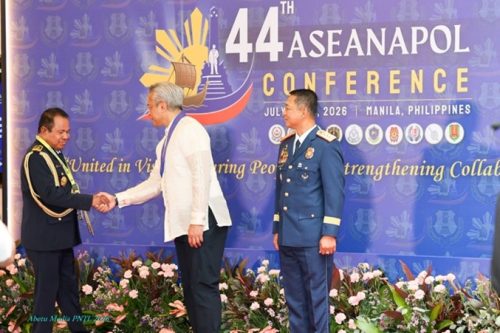
Photo: Facebook PNTL ( 23 July 2026)
The recent fatal shooting of a civilian by a member of the Polícia Nacional de Timor-Leste (PNTL) in Uatucarbau, Viqueque, has once again raised serious questions about firearms control, police discipline and accountability in Timor-Leste. According to media reports, the local man was shot by a member of the PNTL Traffic Section after he was reportedly stopped while riding a motorcycle without a helmet. He later died in Dili after undergoing surgery. The circumstances of the shooting are still being investigated, and it is important that conclusions about individual criminal responsibility are left to the competent authorities. However, the case has already prompted calls for a thorough investigation and renewed training on the appropriate use of firearms.
Fundasaun Mahein (FM) supports these calls. At the same time, the incident should also prompt a deeper discussion about policing reform and operational capacity. As FM and others have written, Timor-Leste has experienced repeated cases involving shootings, excessive force, indiscipline and other misconduct by members of the security institutions. Serious incidents are usually followed by investigations, public statements and calls for additional training, but similar problems continue to occur. This suggests that the challenge is not simply a shortage of training. It is also a question of whether PNTL has sufficiently strong institutional systems, leadership practices and organisational culture to ensure that professional standards are consistently applied.
This question is particularly important as Timor-Leste deepens its integration into ASEAN and PNTL becomes more involved in ASEANAPOL, the association of the national police forces of ASEAN member states. Regional cooperation offers substantial opportunities for training, professional exchange and learning from other police institutions. However, these opportunities will only produce lasting benefits if PNTL addresses internal practices which limit both domestic operational capacity and the effectiveness of external partnerships.
A recurring problem, not an isolated incident
FM has monitored concerns about firearms misuse and police violence for many years. In 2018, three people were killed and four seriously injured in a shooting by a police officer in Kuluhun, Dili. In 2021, two people were killed and another seriously injured in Lahane. In January 2022, six members of the Maritime Police Unit in Covalima were involved in a confrontation with civilians which resulted in the death of a young man. At that time, FM argued that violence and indiscipline within PNTL were serious ongoing problems which threatened not only public safety, but also the legitimacy of the state. Furthermore, we expressed concern that disciplinary processes following police brutality lacked clear evidence that institutional lessons were being implemented.
FM has also documented the misuse of firearms in incidents which did not involve homicide. In 2023, FM reported several allegations involving the shooting of community livestock with military-grade weapons, including cases allegedly involving PNTL and F-FDTL personnel. Community members complained that cases were not adequately followed up and that files sometimes disappeared without clear resolution. Then, in May 2024, FM reported another serious firearms incident in Covalima involving an F-FDTL member deployed to the National Intelligence Service (SNIE), who allegedly discharged a firearm during a confrontation and seriously injured a civilian.
There have also been non-shooting firearms incidents which have raised significant concern. In 2024, for example, FM raised concerns about several cases involving PCIC personnel, including where a service weapon was used to threaten another officer, and a relative of a senior official was permitted to use a service weapon at a PCIC shooting range. More recently, FM has highlighted allegations that foreign actors were provided with police escorts and allowed to shoot service weapons. In 2023, current director of SNIE Mr. Longuinhos Montero formally acquitted of charges related to the illegal weapons and ammunition allegedly found hidden at his residences in Dili and Loes, Liquiçá. Some of these matters have entered formal investigative or judicial processes. However, the wider institutional problem remains: accountability is often slow, unclear or difficult for the public to follow through to a definitive conclusion.
From reactive responses to institutionalised systems
Following a police shooting, public discussion often turns to whether the officer concerned received adequate firearms training or was psychologically fit to carry a weapon. Clearly, police officers entrusted with firearms should be subject to appropriate recruitment screening, psychological assessment and regular evaluation. Firearms competency should not be treated as something established once during initial training. Indeed, FM previously recommended adequate psychological testing as part of improving police recruitment following earlier cases of deadly police violence.
A professional system should identify risks before they result in violence. Supervisors should know which officers are authorised to carry weapons and whether they remain competent to do so. All incidences of service firearms use should be automatically accompanied by reporting and review processes. Complaints and disciplinary cases should be recorded and tracked so that they cannot simply disappear. Where potentially criminal behaviour is alleged, internal disciplinary processes should not substitute for criminal investigation. Officers should understand that misuse of authority will be investigated regardless of rank or political connection.
Effective accountability protects officers, police institutions and the general public just as much as it punishes those guilty of serious offences. Clear rules prevent state institutions from being discredited by the actions of a small number of members and demonstrate to the public that misconduct is taken seriously, which can strengthen the state’s popular legitimacy and prevent unrest. Accountability within the police is, therefore, a serious national security concern, particularly given dissatisfaction with other aspects of government performance among significant sections of the population.
International cooperation creates opportunities, but cannot substitute for domestic reform
Timor-Leste’s membership of ASEANAPOL creates important new opportunities for PNTL. These opportunities are particularly relevant at the present moment because ASEANAPOL has made the fight against scam centres and transnational organised crime a major regional priority – precisely as Timor-Leste confronts the emergence of scam operations and associated concerns involving organised crime, trafficking, illicit finance and foreign criminal networks.
Throughout 2026, ASEANAPOL has repeatedly highlighted the growing threat posed by cyber-enabled fraud and transnational scam networks. In March, its Training Cooperation Meeting agreed to prioritise the disruption of scam centres linked to human trafficking and forced criminality. ASEANAPOL has subsequently developed the ASEANAPOL Scam Combat Task Force (ASCOT), which aims to strengthen operational coordination, intelligence sharing, financial investigation and joint action against transnational scam networks. The 44th ASEANAPOL Conference in Manila in July formally approved the ASCOT concept at the same meeting which approved Timor-Leste’s admission as ASEANAPOL’s eleventh member.
In April, the ASEANAPOL Secretariat studied Malaysia’s National Scam Response Centre, which combines police, financial institutions, telecommunications providers and other actors within a rapid-response system capable of tracing transactions and freezing suspected criminal accounts. ASEANAPOL envisages increasingly interoperable national centres capable of sharing intelligence and coordinating financial disruption across borders.
In light of recent events regarding the exposure of numerous scam centres operating in Timor-Leste, PNTL has an immediate opportunity to learn from regional experience in digital investigations, financial tracing, intelligence-led policing, victim identification, cross-border information exchange and coordinated disruption of criminal networks. Rather than having to develop these capabilities independently, Timor-Leste can participate in regional structures which are already being created specifically to address the same criminal phenomenon now confronting the country.
More broadly, ASEANAPOL has an established structure for training cooperation, specialised capacity building and professional exchange. PNTL can learn from police institutions which have decades of experience in criminal investigation, community policing, firearms management, intelligence, transnational crime and command development. Cooperation with the Australian Federal Police, New Zealand and other international partners can provide further expertise in police governance, professional standards and institutional development.
However, access to regional expertise does not automatically translate into stronger domestic institutions. Timor-Leste may now have greater access than ever before to specialised training, operational partnerships and comparative experience, but these opportunities will only produce sustainable improvements if PNTL is able and willing to absorb them. FM has noted that senior Timorese police officers have sometimes been reluctant to accept advice or training from international personnel, even when those personnel possess relevant specialist knowledge and experience. This demonstrates that while international partners can provide highly experienced investigators, trainers and technical advisers, the benefits will be limited if PNTL personnel do not engage seriously with them.
This is not a problem that foreign partners can resolve on Timor-Leste’s behalf. International advisers can adapt their programmes to local realities, such as by matching senior PNTL commanders with senior counterparts from ASEAN countries or Australia, while specialist officers can work directly with equivalent technical units. Long-term peer relationships may also be more effective than short training courses. But ultimately, PNTL leadership must create an institutional culture which values competence, learning and professional expertise.
The same principle applies more broadly. International partners can help design disciplinary procedures, provide firearms and investigation training, strengthen internal affairs systems and expose Timorese officers to successful practices elsewhere. However, they cannot ensure that rules are applied impartially when personal, political or institutional relationships intervene. Changing the institutional culture of the police is a fundamentally domestic challenge and responsibility.
The most difficult part of police reform
FM has previously observed that political influence and personalised relationships affect security sector command structures and that formal rank does not always correspond with decision making power. In practice, officers with political connections sometimes exercise greater authority than superior officers, while merit and professional qualifications are not always the primary basis for recruitment and advancement within the police (or indeed in other state institutions).
Timor-Leste’s police and security institutions also operate within a society where family connections, historical relationships, political affiliations and local identities can be extremely important. These realities cannot simply be removed through an externally designed institutional reform programme. FM also firmly believes that international partners should not attempt to remake Timorese society according to foreign models – indeed, we have consistently advocated for a ‘best fit’ approach to international cooperation, rather than one based on ‘best practice.’
What domestic institutions can do, however, is establish robust professional rules to ensure that personal relationships become less important when official decisions are made. Examples include a disciplinary system which produces the same response whether an officer is politically connected or not; recruitment and promotion which prioritise merit and professional competence over personal or political relationships; impartial criminal investigations which follow evidence regardless of who is implicated; and accountability for supervisors for the conduct of officers under their command. Developing these practices requires sustained institutional leadership from Timorese police officials.
Using ASEAN cooperation effectively
For this reason, FM believes that Timor-Leste should approach ASEAN police cooperation not simply as an opportunity to send more officers overseas for training, but to establish long-term institutional partnerships aimed at changing professional practice. These could include:
- structured exchanges between PNTL commanders and equivalent commanders in ASEAN police institutions;
- active PNTL participation in ASCOT and ASEANAPOL’s emerging network of National Anti-Online Scam Centres, including specialist exchanges on digital forensics, financial investigation, intelligence sharing and coordinated responses to cyber-enabled organised crime;
- comparative study of firearms licensing, storage, deployment and use-of-force procedures;
- regular psychological and firearms competency assessment for armed officers;
- training for commanders on supervision, disciplinary management and accountability;
- joint review of serious incidents to identify institutional lessons;
- stronger systems for recording and monitoring disciplinary cases;
- leadership programmes focused on meritocracy, professional ethics and evidence-based decision-making; and
- mechanisms requiring officers who attend international training to transfer knowledge into their units and incorporate relevant lessons into PNTL procedures.
Importantly, international partners should evaluate success not by the number of workshops conducted or officers trained, but by establishing metrics and tools which measure whether institutional behaviour changes through analysis of statistical data. For example, did firearms misuse decline? Are more disciplinary cases completed? Do commanders enforce procedures more consistently? Do trained officers apply what they learned? Are promotion and command decisions increasingly based on competence? Do citizens have greater confidence that complaints against police will be investigated fairly?
These are meaningful indicators of institutional development and capacity building, which all cooperation must aim to harness effectively.
Conclusion: ASEAN membership is an opportunity, not a solution
Timor-Leste’s integration into ASEAN and ASEANAPOL comes at a particularly important moment for PNTL. The recent emergence of scam centres and associated transnational criminal activity in Timor-Leste demonstrates that many of the country’s most pressing policing challenges can no longer be addressed through purely national responses. At the same time, ASEANAPOL is developing new regional mechanisms specifically targeting scam networks, including ASCOT and a proposed network of interoperable National Anti-Online Scam Centres. Timor-Leste therefore has an opportunity to participate from an early stage in a regional policing architecture being developed in response to a threat which the country itself is now confronting.
This makes effective international cooperation increasingly important. At the same time, it also makes the quality of PNTL’s internal institutions even more important. An institution cannot become professional simply by joining regional mechanisms, participating in international meetings or receiving foreign training. The value of these partnerships ultimately depends on whether PNTL can absorb external knowledge, adapt it to Timor-Leste’s circumstances and translate it into sustained institutional change and practice.
International partners can provide valuable support for these processes. ASEAN membership can provide new opportunities to learn from neighbouring police forces with cultural and geographical similarities. Australia, New Zealand and other partners can continue to provide valuable technical assistance. However, the most difficult reforms must come from within: Timorese political leaders, PNTL commanders and police officers themselves must ensure that professional standards will be applied consistently; that expertise will be respected; that misconduct will have consequences regardless of status or connections; and that institutional rules matter more than individual relationships.
Timor-Leste should take full advantage of the opportunities created by ASEAN membership and its wider international partnerships. Doing so, however, requires recognising that international cooperation is only one side of successful institutional development. The other side is domestic leadership, responsibility and reform.


