


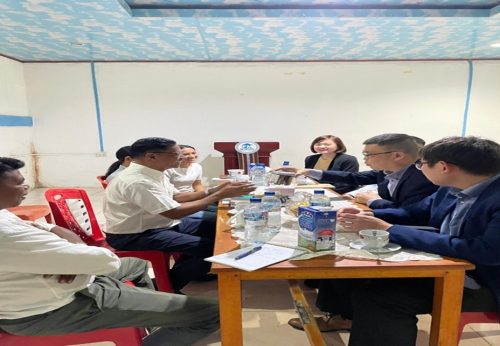
Photo: Fundasaun Mahein (May 2026)
Introduction
Timor-Leste’s future will be shaped by the quality of its public thinking. Elections, infrastructure, petroleum revenues, basic services, institutional strengthening and foreign partnerships are all critical issues. However, behind all of these questions lies a more fundamental issue: whether Timorese society can develop a stronger culture of pensamento — serious, evidence-based and respectful public debate about national problems.
For a long time, Fundasaun Mahein (FM) has observed that many public discussions in Timor-Leste have become increasingly reactive, personal and polarised. Political debate often follows the words of leaders rather than analysing their ideas. Sensitive issues are frequently discussed through rumours, Facebook commentary, street-level conversations and factional loyalty. Disagreement can quickly become personal attack. Instead of producing clearer understanding, public debate often ends by creating new enemies.
A democratic society requires citizens who can question, read, analyse, disagree and participate in national debate without fear or hostility. Furthermore, when public policy is shaped by command, emotion, rumour or short-term political calculation, decisions may respond to immediate political pressures but fail to serve the long-term national interest.
FM believes that Timor-Leste needs a renewed culture of pensamento. This means strengthening research, reading, writing, critical thinking, public seminars, respectful disagreement and evidence-based policy discussion. This is a task for universities, civil society, media, political parties, state institutions, researchers, students and citizens. It is also a security issue, because a society without strong habits of critical debate is more vulnerable to manipulation, misinformation, political tension and instability.
The legacy of intellectual struggle
The struggle for Timor-Leste’s independence was sustained by courage, sacrifice and armed resistance, but it was also sustained by ideas. Timorese intellectuals, diplomats and political leaders played a vital role in articulating the national cause to the world. They explained the meaning of self-determination, exposed injustice, built international alliances and translated the suffering of the Timorese people into a political and moral argument that global audiences could understand.
This intellectual and diplomatic work was central to the independence struggle. Timorese representatives argued their case in international forums, universities, churches, civil society networks, media spaces and diplomatic meetings. They helped transform Timor-Leste from a forgotten occupation into a recognised international cause.
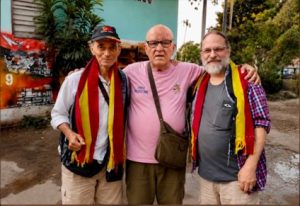
Max Stahl. Tom Hyland and John Miller
International solidarity activists also made an historic contribution. Heroes such as John Miller, Max Stahl, Tom Hyland and many others helped document injustice, mobilise international opinion and keep Timor-Leste’s struggle visible when powerful states preferred silent complicity. Their activism was grounded in evidence, documentation, moral courage and public argument. They showed that effective solidarity requires research, writing, testimony, communication and disciplined advocacy.
This tradition of intellectual argumentation was vibrant during the independence struggle. Timor-Leste’s cause was debated, defended and explained with seriousness across international fora. However, since independence, this culture of public reasoning has weakened. The country has many educated people, experienced leaders, former activists, young graduates and citizens with strong opinions. Yet there are too few sustained spaces where national issues are debated through research, evidence and serious analysis.
The best way to honour the legacy of Timorese intellectuals, diplomats and international solidarity activists is to continue the practice of engaged public reasoning they represented. Their example should inspire a new generation to write, debate, research and speak in the public interest.
The weakness of public debate today
Timor-Leste’s public debate is often dominated by personalities rather than ideas. Political leaders speak and many citizens repeat their positions without sufficient analysis. Parties and factions defend their own side. Social media amplifies anger and accusation. Rumours move quickly. Complex policy questions are reduced to loyalty or opposition.
This pattern affects many areas of national life: security sector governance, veterans’ affairs, land, decentralisation, economic policy, youth employment, education, foreign relations and national identity. These issues require serious discussion because they shape the future of the state. Yet when they are debated mainly through personal loyalty or emotional reaction, they become sources of division rather than opportunities for learning.
Sensitive issues involving political leaders, veterans, military symbolism, uniforms, security institutions or state authority show this problem clearly. These matters should be discussed with reference to law, history, institutional responsibility and the national interest. Instead, they often become social media controversies or partisan arguments. This creates confusion and mistrust.
Universities and research institutions should play a much greater role in transforming sensitive issues into structured debate. When national controversies emerge, universities should organise seminars. Researchers should publish analysis. Students should be encouraged to ask questions. Civil society should contribute evidence. Media should create space for serious discussion rather than simply reproducing political rivalry and personal disputes between elites.
Maun Bo’ot-ism: Barrier and Resource for Pensamento
Any discussion of pensamento in Timor-Leste must also consider the role of traditional hierarchy. FM has written previously about Maun Bo’ot-ism: the dominance of elder male authority in political, social and institutional life. This pattern is not unique to Timor-Leste. Many traditional societies give great authority to male elders, whose words carry moral and political weight. In Timor-Leste, this authority is strengthened by the history of the resistance, respect for sacrifice and the continuing importance of lia, or ceremonies, related to family and ancestors.
When elders dominate decision-making, others may remain silent, bide their time or defer their own thinking. Young people may hesitate to question senior figures, while women are often excluded from serious discussion and decision making. Capable individuals may avoid expressing disagreement because criticism can be interpreted as disrespect. In this environment, public debate becomes narrow. Ideas are judged according to who speaks, rather than according to evidence, logic or the national interest.
At the same time, FM does not believe that Timor-Leste can or should simply reject its traditions. The challenge is to navigate the difficult line between tradition and modernity. Timor-Leste should embrace the best of modern political life — human rights, democracy, rule of law, gender equality, economic freedom, meritocracy and evidence-based policy — while preserving the positive aspects of Timorese identity, including Christianity, communal solidarity, strong family culture and respect for elders.
This balance is extremely difficult. Modern culture, driven by economic integration, migration, digital media and regional globalisation, can overwhelm and displace local traditions. However, defending tradition without reform can also preserve hierarchy, exclusion and silence. FM’s view is that Timor-Leste needs a harmonious blending of the two: a modern democratic culture rooted in Timorese social realities.
In this sense, Maun Bo’ot-ism can also become part of the solution. It is unrealistic to imagine that patriarchal hierarchy and elder dominance will disappear quickly. A more realistic path is for elders themselves to adopt a more progressive role. Elders can use their authority to open space for debate, encourage young people to speak, support women’s participation, resolve conflicts peacefully and guide political transition in the national interest. When elders are humble, cooperative and future-oriented, traditional authority can help build consensus rather than suppress pensamento.
The responsibility of the younger generation is also clear. Young intellectuals, students, researchers, journalists and civil society actors should not wait passively for permission to think. They must write, read, question and organise. But the transition will be more peaceful and productive if respected elders help create space for this new culture of debate. Timor-Leste’s future lies neither in rejecting tradition nor in being trapped by it. It lies in building a social democracy with Timorese characteristics: modern, democratic and rights-based, while still rooted in the country’s own history, identity and communal values.
Literacy, orality and development
The development of literacy is one of the most important transformations in human history. Over the last several centuries, the spread of reading and writing helped democratise knowledge. Written culture allowed ideas, laws, histories, scientific discoveries and political arguments to circulate beyond small circles of authority. People no longer had to rely only on oral transmission, personal memory or the word of powerful figures. They could read, compare, question and preserve knowledge across generations.
The internet has intensified this transformation. Today, people do not need to live near a major library, university or capital city to access information. A young person with a phone can read about history, economics, security, international relations, agriculture, medicine, law or technology. In principle, this is a major opportunity for Timor-Leste.
However, access to information does not automatically create knowledge. The internet democratises access to information, but literacy and critical thinking democratise knowledge. Without strong reading habits, critical thinking and research skills, people may become more exposed to misinformation rather than more empowered by information.
Even advanced democracies struggle with online hoaxes, conspiracy theories, disinformation and political manipulation. In Timor-Leste, the challenge is especially serious because the transition from oral culture to literate culture remains incomplete. Oral traditions remain central to community life, authority, history and social relationships. While these traditions have value and should be respected, modern democratic governance requires written analysis, documentation, policy papers, legal reasoning, scientific knowledge and public arguments that can be tested and debated beyond personal authority.
The transition from orality to literacy is a fundamental feature of development. The precise causal relationship is complex. It is partly a “chicken and egg” situation: societies become more literate as they develop, while literacy itself accelerates development by expanding people’s ability to learn, organise, innovate and participate in public life. What is clear is that literacy cannot be left to chance.
The Government can adopt policies to promote reading, libraries, school quality, translation, publishing, teacher training, public communication and access to educational materials. Schools must go beyond basic memorisation of the alphabet, words and phrases: they must also cultivate the habit of reading, questioning and reasoning. Parents also have a responsibility to inculcate a love of reading in their children. A national reading culture cannot be built only through ministries and schools. It must also be built in families, homes, communities, churches, youth groups and civil society spaces.
Strong examples of youth-driven literacy initiatives already exist, in which self-organised groups of young people bring books to read and discuss in groups in public spaces such as Cinco de Maio Park in Dili. These movements should serve as inspiration for the Government and international partners who aim to promote literacy by supporting independent youth groups across the country to develop themselves through spontaneous voluntary action.
Language and access to knowledge
In Timor-Leste’s context, language is a complex, politically sensitive and culturally important issue. Tetum as the national language is one of Timor-Leste’s greatest sources of unity. It carries identity, memory, social meaning and national belonging. FM strongly supports efforts to develop Tetum as a written and literary language.
At the same time, Timor-Leste faces urgent literacy needs. It may be unrealistic to expect Tetum to become a fully developed literary, academic and technical language in the near future, given its particular genesis and socio-political development. There are still limited books, academic texts, policy materials and technical resources available in Tetum, while its limited vocabulary means that it relies on loan words from Portuguese, Bahasa and even English to adequately engage with modern topics. This creates a major obstacle for building a reading culture and expanding access to knowledge.
For this reason, FM believes that access to foreign language texts and literacy training in English, Portuguese and Bahasa Indonesia is essential. These languages already provide a large material basis for learning. They give Timorese citizens access to books, research, regional analysis, international law, science, technology and global knowledge. Timorese people are already multilingual and there is strong demand for foreign language learning. This is an advantage that should be strengthened rather than treated as a threat.
Timor-Leste is also rapidly globalising and integrating into the region. With increased integration with ASEAN, English will become even more important for diplomacy, higher education, trade, regional cooperation and access to international debate. Bahasa Indonesia remains highly relevant for regional engagement, media access and communication with one of Timor-Leste’s closest neighbours. Portuguese continues to connect Timor-Leste with its constitutional, legal, historical and Lusophone networks.
Promoting foreign language literacy does not mean abandoning Tetum. A balanced approach is needed. Tetum should be developed as a written language, while English, Portuguese and Bahasa Indonesia should be used strategically to give citizens rapid access to existing bodies of knowledge. Timor-Leste’s multilingual reality can become a national strength if it is supported through serious education policy, translation programmes and public investment in reading culture.
Pensamento as a security issue
From FM’s perspective, this debate has direct relevance to peace, stability and national security. Security is often understood through police, defence, borders, crime and state institutions. These are essential. However, the quality of public reasoning also shapes national stability.
A society with weak critical literacy is vulnerable to manipulation. Rumours can spread quickly. Citizens may be mobilised through fear, anger or loyalty rather than evidence. Political actors may exploit emotion. Social media can inflame tension. Sensitive issues can escalate because there are too few trusted spaces for calm, informed discussion.
This is especially important in Timor-Leste, where the memory of conflict remains present and where politics is still strongly shaped by personal authority, historical legitimacy, veterans’ networks and elite relationships. Leaders are often highly skilled political actors. Many understand how to mobilise emotion, history and loyalty. Citizens therefore need stronger tools to analyse political messages, question claims and assess policies independently.
A culture of pensamento strengthens national resilience. Citizens who read, question and debate are harder to manipulate. Public institutions become stronger when policy is tested through evidence. Political disagreement becomes less dangerous when people learn to separate criticism of ideas from personal hostility. Universities, media and civil society become stabilising forces when they provide spaces for structured debate.
Timor-Leste’s stability therefore depends partly on its intellectual culture. A peaceful democratic state requires more than obedience to leaders. It requires citizens capable of independent judgement.
The role of universities and public institutions
Universities should become central spaces for national debate. When foreign leaders, diplomats, researchers, public intellectuals or senior officials visit Timor-Leste, their engagement should not be limited to the Presidential Palace, government offices or diplomatic receptions. Universities and research centres should also host public lectures, seminars and discussions.
In many countries, universities play this role by exposing students and citizens to international perspectives, competing ideas and critical discussion. Timor-Leste needs to build this tradition more deliberately. Students should hear from visiting leaders and researchers. National issues should be debated in academic settings. Public officials should be invited to explain policies and respond to questions. Civil society should participate. Media should report on these discussions.
This would help normalise debate as a constructive national practice. It would also encourage young Timorese people to see themselves as participants in the country’s intellectual life, rather than passive followers of political leaders.
Political parties also have a responsibility. Parties should develop policy platforms based on research and public consultation. They should explain their ideas in writing, participate in debates and encourage their members to think critically. A democracy cannot mature if political competition remains centred on personalities, history and patronage.
FM’s contribution and invitation
Fundasaun Mahein has long sought to contribute to a culture of pensamento through research, analysis and public commentary on security, governance, democracy, human rights, regional affairs and institutional reform. FM does not claim to have all the answers. Our role is to ask questions, present evidence, analyse risks and encourage public debate about issues that affect Timor-Leste’s future.
We believe that Timor-Leste needs more serious writing, more seminars, more policy analysis, more university engagement, more public lectures, more translation, more reading and more respectful disagreement. The country has many educated people, young researchers, experienced activists, former diplomats, journalists, academics and students who can contribute to this process. What is missing is a stronger culture and infrastructure of debate.
FM therefore invites universities, researchers, students, civil society organisations, journalists, public institutions and independent intellectuals to engage with us. We welcome comments on our publications, responses to our analysis, guest articles, joint seminars, collaborative research and invitations to participate in public discussion. We are also open to working with universities and research institutions to strengthen debate on security, democracy, geopolitics, development and national identity.
Timor-Leste needs more institutions willing to host serious discussion. It needs more people willing to write. It needs more citizens willing to read. It needs more leaders willing to be questioned. It needs more young people willing to think beyond factional loyalty and personal attack.
Conclusion
The struggle for independence showed the power of ideas. Timorese intellectuals and diplomats articulated the national aspiration with courage and discipline. International solidarity activists helped document injustice and communicate Timor-Leste’s cause to the world. That history should not be treated only as memory. It should be understood as a responsibility.
Post-independence Timor-Leste needs to recover the spirit of serious public argument that helped sustain the national struggle. The country must build a stronger culture of pensamento: one that respects tradition while strengthening literacy, welcomes disagreement without creating enemies, uses foreign languages to access global knowledge while developing Tetum, and transforms sensitive national issues into evidence-based public debate.
This is essential for consolidating democracy, advancing sustainable and inclusive development, and securing long-term peace and stability. FM is ready to contribute to this effort and calls on others to join.

